
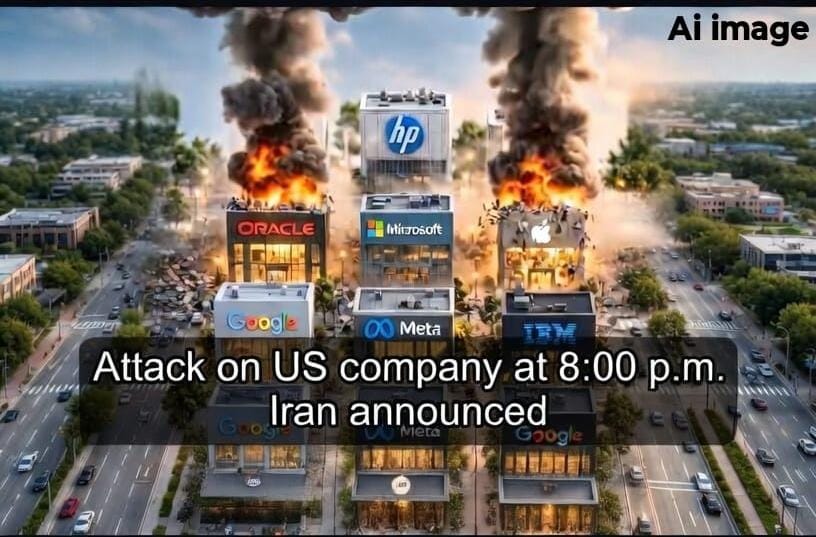
Iran Announces To The World,ATTACKS on US Companies at 8pm- The geopolitical landscape of 2026 is increasingly shifting from physical borders to the digital frontier. Recently, discussions have circulated regarding Iran’s potential for large-scale retaliation or cyber offensives targeting Silicon Valley’s most prominent corporations—entities such as Google, Microsoft, Meta, Amazon, HP, and Dell.
While the threat of a cyberattack is a constant reality in modern warfare, the specific targeting of these multi-trillion-dollar companies raises significant questions about global stability, economic security, and the evolving nature of international diplomacy.
Is the Threat Valid? Understanding Iran’s Cyber Intent
To address the situation directly: There is no confirmed, public declaration from the Iranian government stating they intend to “destroy” or launch a singular, catastrophic attack on all these companies simultaneously. However, intelligence agencies (including the FBI and CISA) have long warned that Iran views these corporations as more than just businesses. They are seen as extensions of American influence and surveillance capabilities. Iran’s digital strategy focuses on asymmetric warfare—using cyber tools to challenge a technologically superior adversary like the United States without engaging in traditional combat.

The Target List: Why These Specific Companies?
If Iran were to escalate its digital operations, the companies you mentioned are logical objectives for several strategic reasons:
- Google & Meta (Facebook/WhatsApp): Iran views these as platforms for Western influence. They are often criticized by the Iranian state for facilitating domestic communication during periods of internal unrest.
- Microsoft & Amazon (AWS): These companies form the backbone of the world’s cloud infrastructure. An attack here is not just about data; it is about disabling the digital services that governments, hospitals, and militaries rely on daily.
- HP & Dell: These represent the hardware supply chain. Disrupting these entities affects the physical availability of computing power and infrastructure.

Geographic Reach: Distance is Irrelevant
In the digital realm, physical distance does not exist. Unlike a conventional missile that must travel thousands of miles from the Middle East to California, a digital strike—such as malware or a Distributed Denial of Service (DDoS) attack—travels at the speed of light through fiber-optic cables.
- Location: While these companies are headquartered in the U.S., their servers and data centers are distributed globally.
- Execution: State-sponsored groups often use “proxy” hackers to mask their origin, making it difficult for the U.S. to justify a direct military counter-response.

The Objective: Why Would They Strike?
The primary driver behind Iranian cyber aggression is typically retaliation and deterrence. * Economic Pressure: Iran remains under heavy international sanctions. Targeting the “engine” of the U.S. economy—Big Tech—is viewed as a way to exert counter-pressure.
- Geopolitical Payback: Historically, these threats increase following specific events, such as the assassination of high-ranking officials or suspected sabotage of Iranian industrial facilities.
- Digital Sovereignty: By targeting these firms, Iran aims to demonstrate that the U.S. cannot dominate the digital world without facing consequences.

Company,Annual Revenue (approx. $B),
- Company,Annual Revenue (approx. $B),Net Profit (approx. $B),Employees Global
- Amazon,$716.9 Billion,$59.2 Billion,”1,556,000″
- Google (Alphabet),$350.0 Billion,$100.1 Billion,”190,000″
- Microsoft,$281.7 Billion,$101.8 Billion,”228,000″
- Meta (Facebook),$200.9 Billion,$62.4 Billion,”78,000″
- Dell,$95.6 Billion,$4.6 Billion,”108,000
- “HP,$53.0 Billion,$3.2 Billion,”58,000″Total,~
- $1.7 Trillion,~$331.3 Billion,~2.2 Million
Iran’s Reach: Distance and Missile Capabilities
While cyberattacks are the primary threat, you asked about physical distances and missiles. As of early 2026, Iran has demonstrated a significantly expanded range.
1. Distance to TargetsDigital attacks have zero distance, but for physical missiles, the distances from Tehran are:To Diego Garcia (US-UK Base): ~3,800 to 4,000 km.To London/Europe: ~4,000 to 5,000 km.To USA (Silicon Valley/Washington DC): ~11,000 to 12,000 km.

Global Impact: A Digital Domino Effect
A successful, coordinated attack against even one of these giants would have a catastrophic ripple effect:
- Economic Paralysis: Amazon Web Services (AWS) powers a massive portion of the internet. If it were disabled, banking, logistics, and retail applications worldwide would cease to function.
- Data Vulnerability: The breach of personal data for billions of users would lead to unprecedented identity theft and a total loss of public trust in digital systems.
- Market Instability: Technology stocks drive global markets. A successful strike could trigger a massive financial downturn or a global recession.

Potential Damages and Losses
The financial damage of such an event is estimated to be in the hundreds of billions of dollars.
- Direct Costs: The immense capital required for system restoration and security overhauls.
- Indirect Costs: Lost productivity for millions of businesses that rely on Google Workspace or Microsoft Azure to operate.
- Human Safety: If healthcare systems or power grids—which often utilize these cloud services—are disrupted, the situation could lead to a loss of life.
The United States Response: A “Red Line”
The U.S. government has made its stance very clear: A significant cyberattack is considered an act of war.
- Defend Forward: The U.S. employs proactive tactics, where they enter adversary networks to disrupt an attack before it is launched.
- Sanctions: Immediate freezing of global assets belonging to any individual or entity involved in cyber-espionage.
- Kinetic Response: The U.S. reserves the right to respond to a digital attack with physical military force if the damage to infrastructure or human life is substantial.

Conclusion
While Iran possesses the capability to harass these companies through data breaches or service disruptions, a total “destruction” of companies like Google or Microsoft is highly unlikely due to the massive, multi-layered security protocols these firms maintain. Often, these reports serve as psychological warfare—intended to create fear and uncertainty.
The situation remains a “Cold War” of code. While the threat is serious, it is managed through constant vigilance, high-level encryption, and international intelligence cooperation.