
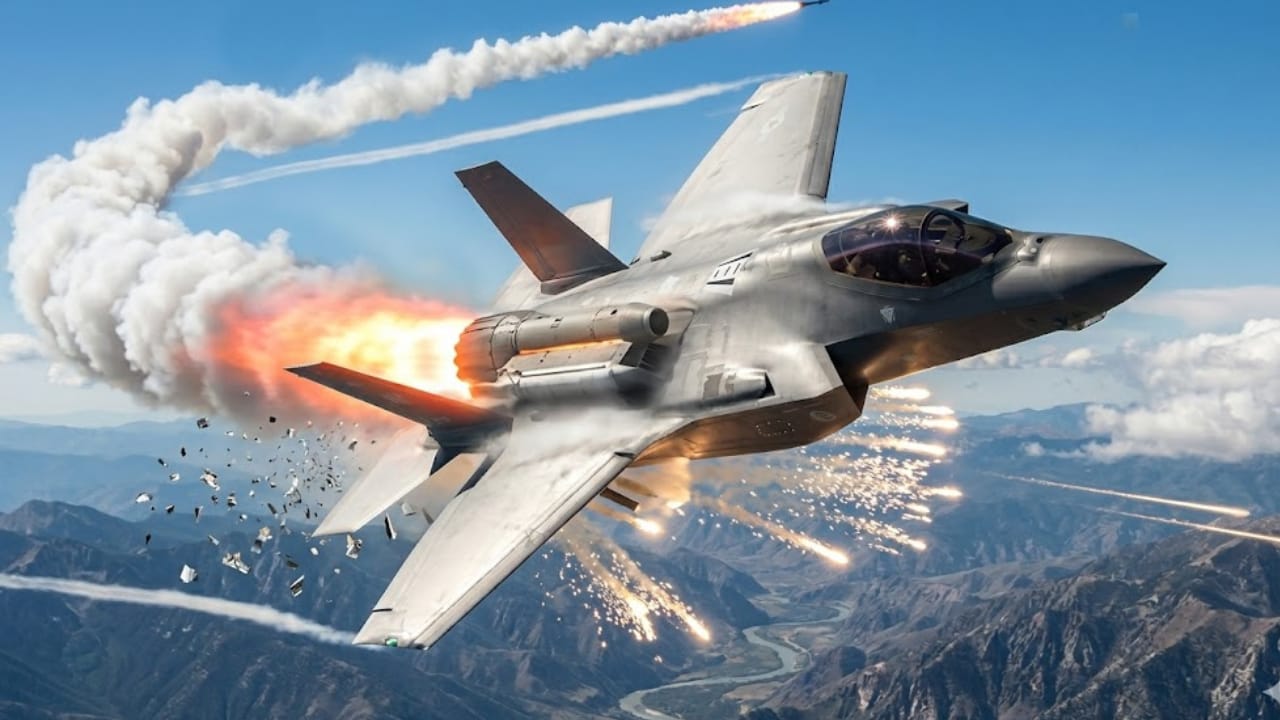
F-35 DOWNED? The claims regarding Iran shooting down an F-35 on March 31, 2026, or in the past, involve a mix of high-stakes geopolitical tension and significant misinformation. To provide clarity, we need to distinguish between official military records and speculative theories.
Below is a comprehensive, SEO-friendly article detailing the situation, the technical realities of the F-35, and a fact-check on the claims involving Iran.

The F-35 Stealth Crash of March 31: Technical Failure or Geopolitical Conflict?
The Lockheed Martin F-35 Lightning II is widely regarded as the most advanced multi-role fighter jet in the world. However, its sophisticated technology hasn’t made it immune to accidents. Following the reports of an F-35 crash on March 31, 2026, social media and certain regional news outlets have been flooded with claims that the aircraft was intercepted and shot down by Iranian defense forces.
In this article, we analyze the facts behind the March 31 incident, evaluate the claims of Iranian involvement, and look at the history of F-35 losses.
1. The March 31 Incident: What Actually Happened?
On March 31, an F-35 Lightning II was involved in a “mishap” during a routine training exercise. While the Pentagon and the U.S. Air Force have confirmed the loss of the airframe, the official preliminary reports point toward technical malfunction rather than hostile fire.
Key Details of the Incident:
- Location: The incident occurred over international waters/designated training ranges, far from Iranian airspace.
- Pilot Status: The pilot successfully ejected and was recovered by search and rescue teams.
- Initial Findings: Ground controllers reported “anomalies” in the engine performance data seconds before the pilot reported a loss of control.

2. Did Iran Shoot Down the F-35? Fact-Checking the Claims
There have been viral claims suggesting that Iran used a sophisticated missile system to bring down the stealth jet. However, these claims lack verified evidence from international observers or satellite imagery.
The “Missile” Theory
Some reports suggest Iran used the Bavar-373 or a modified Khordad-15 surface-to-air missile (SAM) system. While Iran has made significant strides in radar technology, shooting down a 5th-generation stealth fighter like the F-35 is an immense challenge.
- Stealth Technology: The F-35’s Radar Cross Section (RCS) is roughly the size of a metal marble. Standard missile systems struggle to “lock” onto such a small signature long enough to guide a missile to the target.
- Electronic Warfare: The F-35 is equipped with the AN/ASQ-239 Barracuda system, which provides 360-degree awareness and can jam incoming missile signals.
Did Iran Shoot Down an F-35 Previously?
There is no verified historical record of Iran ever shooting down an F-35.
- The 2019 Incident: People often confuse this with the June 2019 incident where Iran shot down a U.S. RQ-4A Global Hawk (a large, non-stealthy surveillance drone). That was a significant event, but it was not an F-35.
- Israeli F-35 Claims: There were rumors in 2018-2022 that an Israeli F-35 was hit by a Syrian S-200 missile, but evidence later showed the jet likely collided with birds or suffered a mechanical failure.

3. Likely Causes: Why do F-35s Crash?
If it wasn’t a missile, why did the jet go down? The F-35 program has faced several “teething” issues:
A. Engine Vibration and Harmonic Resonance
The Pratt & Whitney F135 engine has been prone to “fuel tube” vibrations. In 2023, the entire global fleet was briefly grounded after a crash in Texas revealed a vibration issue that caused the engine to fail during vertical takeoff/landing.
B. Software Glitches
With over 8 million lines of code, the F-35 is a flying computer. A single “bug” in the flight control software can cause the jet to misinterpret its position in the sky, leading to unrecoverable stalls.

C. Maintenance and Supply Chain
The F-35 requires specialized parts. If a non-spec component is used or if a sensor is improperly calibrated during maintenance, it can lead to catastrophic failure during high-G maneuvers.
4. Why These Rumors Spread
The “Iran shot it down” narrative is often used as Information Warfare. By claiming they have neutralized a stealth jet, nations can project power and discourage adversaries. However, in modern warfare, a stealth jet being shot down would be accompanied by clear debris photos, radar logs, and propaganda videos from the attacking nation—none of which have been produced for the March 31 crash.
5. Conclusion: The Reality of Modern Aviation
The F-35 crash on March 31, 2026, appears to be a tragic loss of a multi-million dollar asset due to mechanical or systemic failure, not an act of war. While Iran has successfully targeted drones in the past, the F-35 remains a ghost to most existing air defense systems.
The U.S. Military continues to investigate the crash to ensure the safety of the remaining fleet. Until the “Black Box” data is released, any claim of a missile strike remains speculative and unverified.

Quick Summary Table
| Feature | Details |
| Date of Incident | March 31, 2026 |
| Aircraft Model | F-35 Lightning II |
| Primary Suspected Cause | Engine/Technical Malfunction |
| Iranian Claim | Unverified / Likely Misinformation |
| Past Iranian Successes | RQ-4 Global Hawk Drone (2019) |
| Pilot Status | Safe (Ejected) |
Disclaimer: This article is based on currently available flight safety reports and geopolitical analysis. Official military investigations may take months to reach a final conclusion.