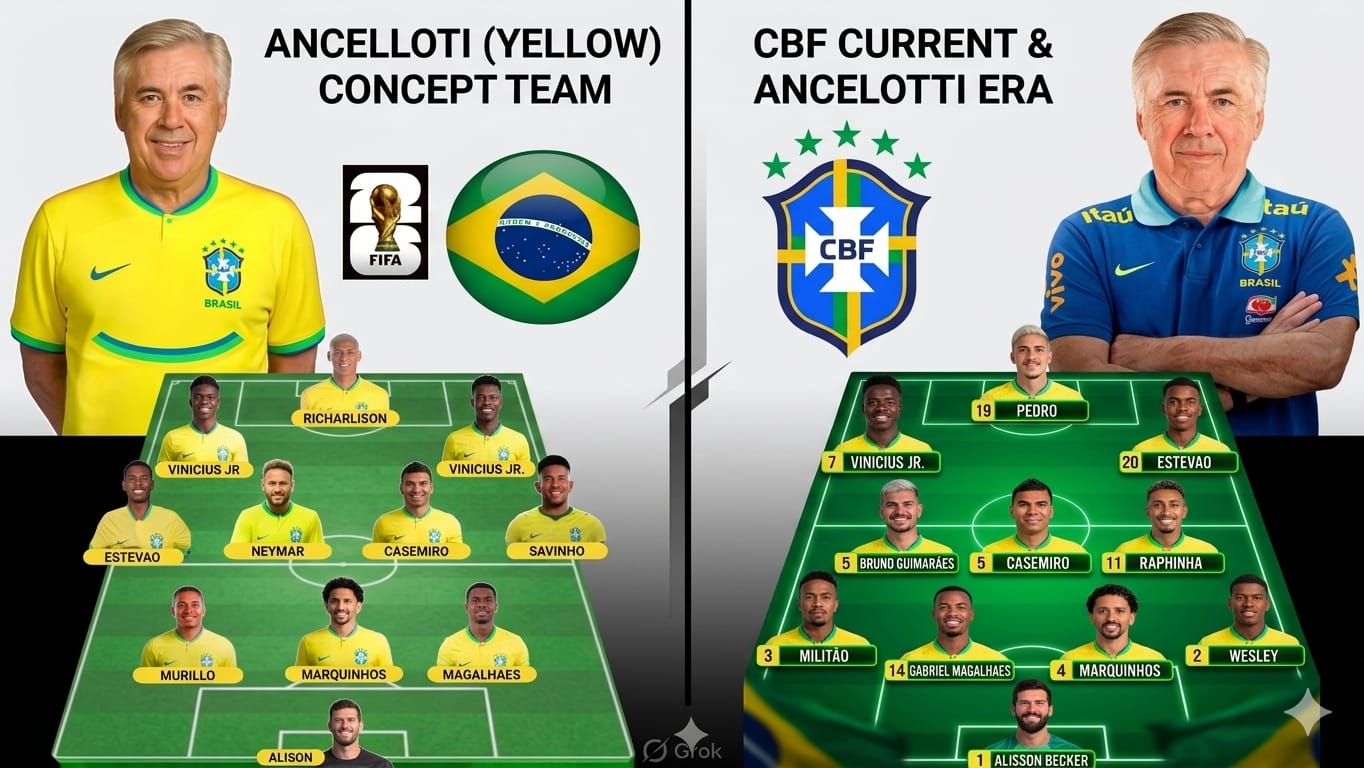
Brazil World Cup 2026 OLD vs NEW TEAM—This comparison explores the two potential Brazil lineups (A and B) displayed in your image. While both squads are packed with world-class talent, Team B appears to be the more “lethal” and balanced choice for a major tournament like the FIFA World Cup 2026.
Here is a detailed analysis of why Team B stands out, the role of the coach, and the potential weaknesses of Team A.
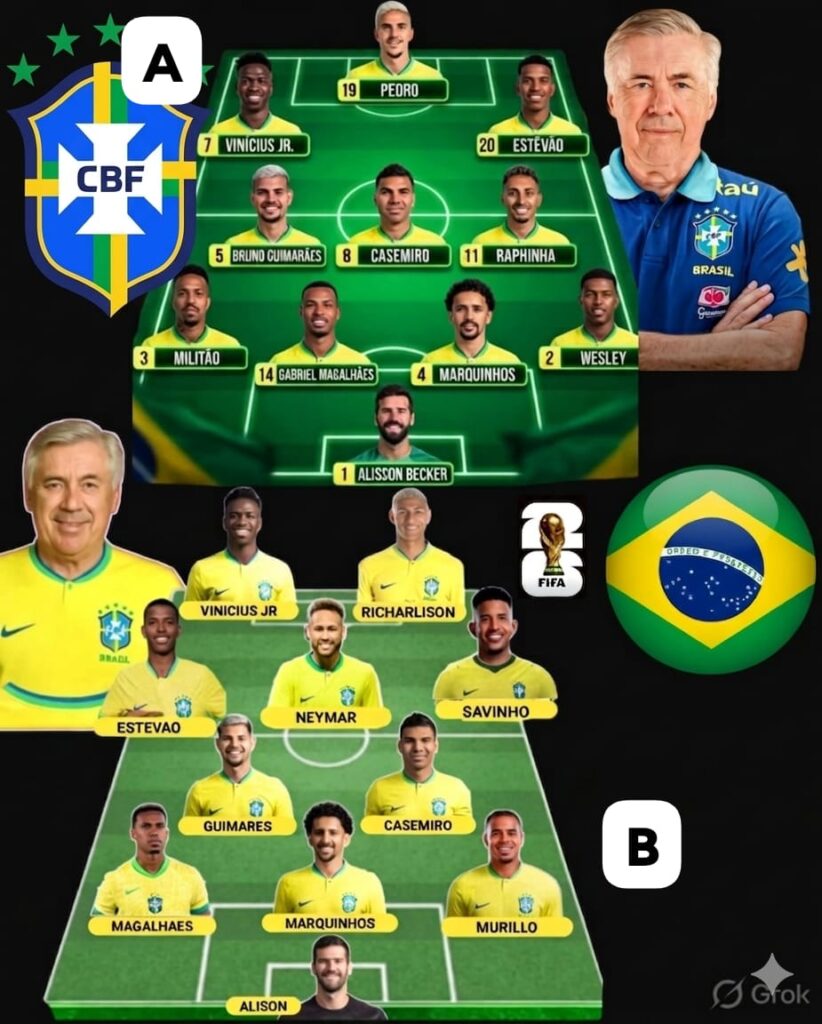
Brazil World Cup 2026: Which Lineup is the True Champion?
As the 2026 FIFA World Cup approaches, the debate over Brazil’s starting XI is heating up. Fans are torn between two primary philosophies represented by Lineup A and Lineup B. The central figure uniting both visions in this graphic is the legendary Italian manager, Carlo Ancelotti.
The Manager: Carlo Ancelotti (The Tactical Mastermind)
Both lineups benefit from having Ancelotti at the helm in this hypothetical scenario. Known as a “Player’s Coach,” Ancelotti’s greatest strength is his ability to adapt his tactics to the specific strengths of his stars rather than forcing them into a rigid system. Having coached players like Vinícius Jr. and Rodrygo at Real Madrid, he understands the “Brazilian flair” better than almost any other European manager.
Team B: Why it is the Superior Choice (Strengths)
Team B offers a superior blend of veteran leadership, tactical flexibility, and raw pace, making it the more formidable squad.
1. The “Neymar” Factor (The Number 10 Role)
In Team B, Neymar Jr. occupies the central playmaker role. While he is getting older, his vision, passing range, and ability to draw fouls remain world-class. Having Neymar in the center forces opposition defenders to collapse inward, which creates massive pockets of space for the wingers to exploit.
2. Modern Defensive Pairing (Murillo and Magalhães)
Team B features a more modern and athletic defensive line. Gabriel Magalhães has proven himself as a powerhouse in the Premier League, and Murillo provides the recovery speed necessary to play a “high line.” This duo is better equipped to handle fast counter-attacks than the defenders in Team A.
3. Youthful Energy (Savinho and Estêvão)
The inclusion of Savinho on the wing adds a layer of unpredictability. Combined with the defensive stability of Casemiro and Bruno Guimarães in the double-pivot, Team B looks incredibly stable. It allows the front four to attack with total freedom.
Team A: Where it Falls Short (Weaknesses)
While Team A is strong, it possesses structural flaws that could be exploited by top-tier European or South American rivals:
* Midfield Imbalance: Team A lists Raphinha in a more central/midfield role. Raphinha is a natural winger who thrives on the touchline. Placing him in the middle could leave the midfield tactically exposed and defensively “thin” against physical teams.
* Positional Concerns: Playing Éder Militão as a makeshift fullback (or relying on Wesley at this level) might lack the offensive overlap required in modern football.
* The “Pedro” Dependency: While Pedro is a clinical finisher, he is a traditional “Target Man.” If the wingers are marked out of the game, Pedro can become isolated, making the attack stagnant.
Final Verdict: Team B is the Winner
If we must choose one path to glory, Team B is the clear favorite. It balances the “Joga Bonito” (beautiful game) with the defensive discipline required to win a seven-game tournament.
Comparison Summary:
| Feature | |Team A | | Team B | | Winner |
| Attack | Vinícius, Pedro, Estêvão |Vinícius, Richarlison, Neymar | Team B |
| Midfield | Casemiro, Guimarães, Raphinha | Casemiro, Guimarães, Savinhao | Team B |
| Defence | Marquinhos, Milito, Wesley | Marquinhos, Magalhães, Murillo | Team B |
| Manager | Carlo Ancelotti | Carlo Ancelotti | Tie |
Conclusion: Team B possesses the “X-factor.” The chemistry between Neymar’s experience and Vinícius Jr.’s explosive speed is a nightmare for any defense. Team A feels experimental, while Team B looks like a finished product ready to lift the trophy.