
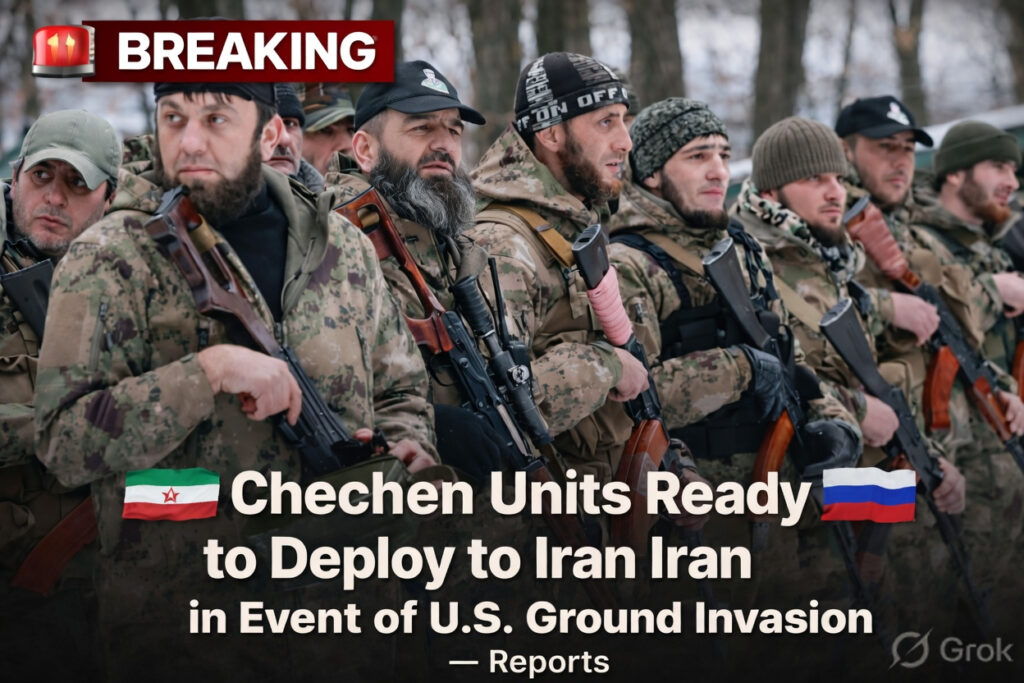
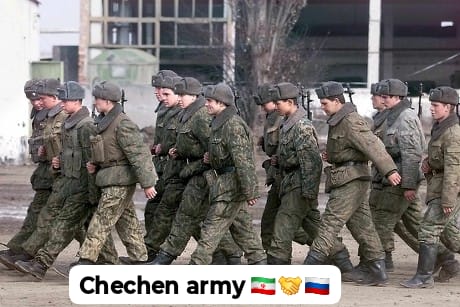
Chechen Unit Ready To Deploy To Iran, Iran In Event of U.S Ground Invasion__The recent reports regarding the Chechen units and their potential involvement in the Middle East represent a significant shift in regional geopolitics. As of March 2026, the announcement by Ramzan Kadyrov’s forces—vowing to deploy to Iran in the event of a U.S. ground invasion—highlights the deepening military ties between Moscow and Tehran.
Here is a detailed, step-by-step breakdown of who these units are, their capabilities, and the strategic reasons behind this bold stance.
What are the Chechen Units (Kadyrovites)?
The Chechen units, commonly referred to as the Kadyrovites, are a specialized paramilitary force from the Chechen Republic of the Russian Federation.
- Leadership: They are led by Ramzan Kadyrov, the Head of the Chechen Republic, who is a staunch and fiercely loyal ally of Russian President Vladimir Putin.
- Legal Status: Officially, these units are part of the Rosgvardia (Russian National Guard). However, in practice, they operate with a high degree of autonomy and are primarily accountable to Kadyrov himself.
- Origin & History: They emerged following the Second Chechen War. These fighters were originally part of the rebel factions but switched sides to support Russia. Today, they serve as Putin’s elite “foot soldiers” for high-stakes missions.
- Combat Capabilities and Power
Chechen fighters are widely regarded as some of the most effective and ruthless Urban Warriors in modern warfare.
- Psychological Warfare: They are masters of intimidation. By utilizing social media (often nicknamed the “TikTok Army”), they project an image of brutality designed to break the enemy’s morale before the first shot is fired.
- Urban and Guerrilla Expertise: Their effectiveness was proven during the Syrian Civil War and the conflict in Ukraine (notably the Siege of Mariupol). They specialize in house-to-house combat in densely populated cities.
- Specialized Training: These units are trained to Spetsnaz (Russian Special Forces) standards. They are equipped with advanced Russian weaponry, armored vehicles, and sophisticated drone technology.
- Operational Scale and Deployment
Kadyrov commands a force estimated between 10,000 to 40,000 active fighters.
- Battlefield Presence: During the Ukraine conflict, they demonstrated the ability to mobilize and rotate thousands of troops to the frontlines rapidly.
- Role in Iran: In the context of an Iranian defense, they would likely serve as “Shock Troops” or specialized units for asymmetric warfare, designed to bog down conventional Western forces in treacherous terrain.
- Why Does Russia Maintain This Force?
For Vladimir Putin, the Kadyrovites serve several critical strategic purposes:
- Proxy Warfare: They allow Russia to intervene in conflicts without always deploying the regular military, providing a layer of deniability or a specialized alternative.
- Internal Stability: By empowering Kadyrov, the Kremlin ensures that Chechnya—once a hotbed of rebellion—remains stable and pro-Russia.
- Absolute Loyalty: Putin requires a force that is personally loyal to him, capable of carrying out complex or controversial orders where the regular bureaucracy might hesitate.
- The Religious Context: Why Sunnis are Supporting Shia Iran
This is a pivotal question, as Chechens are primarily Sunni Muslims, while Iran is a Shia-majority nation. Several factors bridge this sectarian gap:
- A Common Enemy: Kadyrov’s stance is more political than theological. He views the U.S. and Israel as the primary “enemies of Islam.” In his view, an attack on a Muslim nation (Iran) is an attack on the entire Islamic world.
- The “Protector of Islam” Image: Kadyrov frequently positions himself as a global guardian of Islamic values. He has characterized the recent tensions as a betrayal of the faith by Western powers.
- The Russia-Iran Axis: Russia and Iran have formed a “no-limits” defense partnership. Iran has supplied Russia with drones and missiles; in return, Russia provides a security umbrella. Kadyrov’s actions always align with Putin’s broader foreign policy objectives.
- Is This Deployment Realistically Possible?
As of March 2026, the U.S. has reportedly moved nearly 20,000 additional troops and carrier strike groups to the Middle East. In response, Iran has warned of severe consequences for any “aggressor.”
- Strategic Deterrence: If a ground invasion were to occur, Iran would need unconventional fighters who can turn rugged mountains and sprawling cities into a “killing zone” for invaders.
- Synergy with the IRGC: Chechen units could integrate with the Islamic Revolutionary Guard Corps (IRGC), creating a hybrid warfare front that would make any ground campaign incredibly costly and prolonged for the U.S.
Final Summary
The declaration of the Chechen units’ readiness to deploy to Iran is a calculated act of deterrence. It serves as a warning to the West that Iran is not isolated. If the conflict escalates to the ground, the U.S. would face not just a national army, - but some of the most battle-hardened paramilitary forces in the world. While much of this news circulates through state-aligned media like Press TV, the military reality of the Russia-Iran alliance makes this a threat that global intelligence agencies are taking very seriously.